
"Chinese space station will fall to Earth within two weeks"
https://arstechnica.com/science/2018/03/chinese-space-station-will-fall-to-earth-within-two-weeks/
I've been wondering how viable it is at this point to bootstrap your own space station. Actually, I did some sketches on my notepad and basically, I think I can work out a not-completely-terrible space station for a few million (this is totally an awesome idea and I reject your reality)
One complication is the docking port design
It's like the USB connector wars... in space
Speaking of docking port design, for space stations and the like, most have settled on APAS (Androgynous Peripheral Attach System)
https://en.wikipedia.org/wiki/Androgynous_Peripheral_Attach_System
Basically, you can approach the the craft you're about to dock to in multiple angles. There are three "petals" and three locks to match
I much prefer the earlier design with four petals because it gives you more options on approach
OK, I’ve been thinking more about this spacecraft docking idea (because I don’t nearly have enough pipe dreams), and it occurs to me that we already have something of a near-universal spec for industrial communication that will work well for docking control
RS-485 is used in factories and plants around the world in different flavors. It’s a serial communications standard, but doesn’t have a universal connector specified
I’m sure a space-tolerant protocol can be written over it for docking
The nice thing about a serial link is that all devices share the same bus. This isn’t your typical data transfer setup so speed isn’t really an issue, only reliability is
Simplicity = Reliability in most cases
A single bus that connects a craft or station computer to the dock, robotic arm, airlock, external doors etc... can mean a completely automated rendezvous is possible with minimal wiring and control circuitry
Been thinking more about the bootstrap space station idea and not only is it possible...
it’s necessary
</McConaughey>
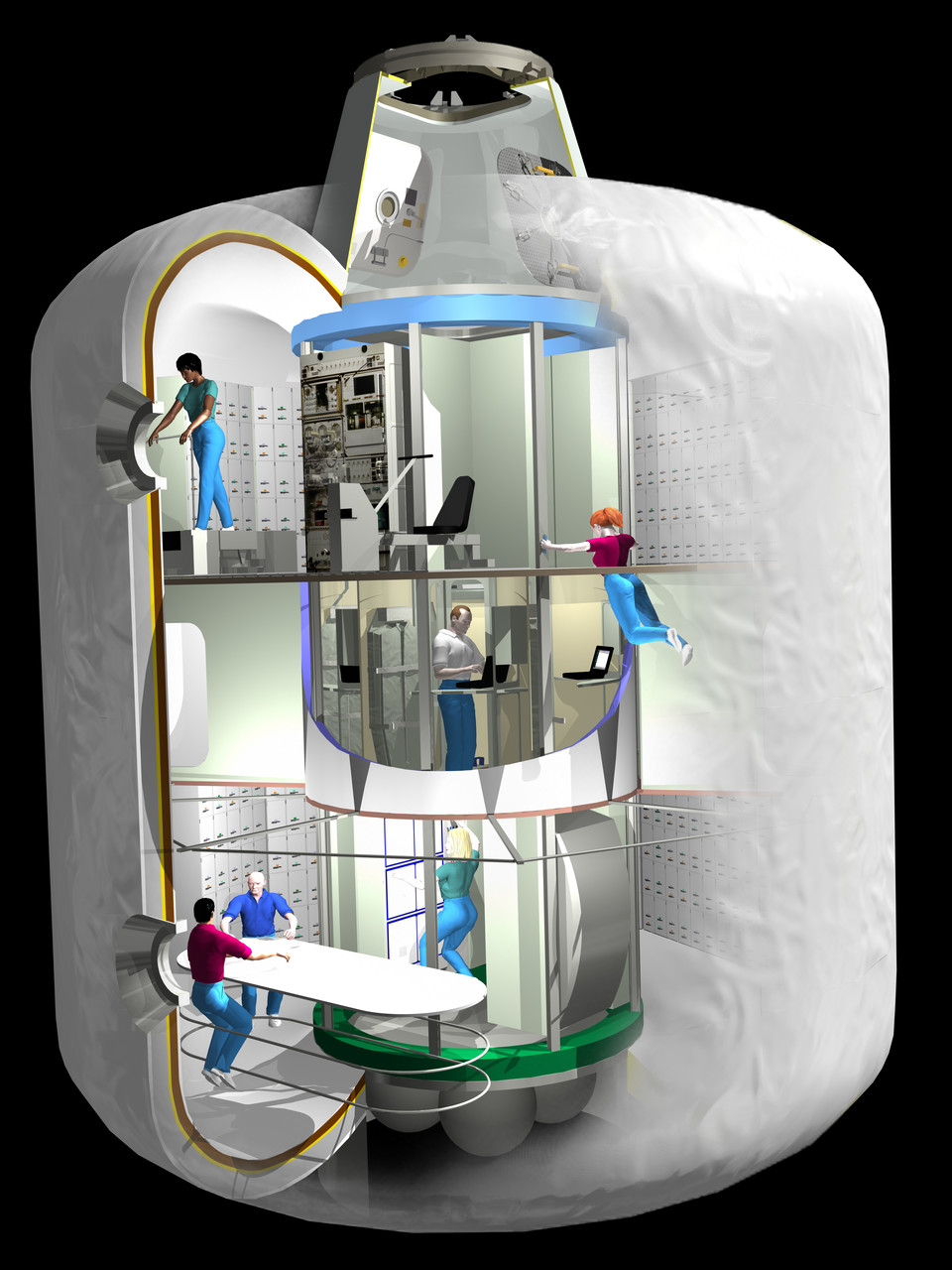
You do need some kind of central rigid truss to act as the “spine”, but all or most modules attaching to it can be inflatable, similar to those developed by Bigelow Aerospace. It cuts down on the weight and space needed to send them up. On “hab-only” launches, you could probably send up two at a time
Cheaper launches = more can afford to pool resources for launching
So while looking at control and data infrastructure for a bootstraped space station (we’re all about things that are actually doable), I found that I accidentally recreated MIL-STD-1553, an already widely used military specification for reliable avionics and other controls
There are some superficial similarities to RS485, but this seems a more robust spec and includes a protocol too
Ironically, the ISS already includes connectors on docking ports for 1553
TFW you try to combine 4-5 different protocols and end up reinventing USB 🙃
Actually, there should be a USB for spacecraft
So turns out it’s actually possible to implement an Ethernet-USB-RS485 mashup connection protocol thingy that can work pretty well for spacecraft
Here’s a possible wiring layout with Cat6 shielded cable:
TXD- White/Orange
TXD+ Orange
CTS- White/Green
RTS+ Blue
RTS- White/Blue
CTS+ Green
RXD- White/Brown
RXD+ Brown
GND Drain (with shielded plug)
This should stop most crosstalk issues and, best of all, you can already buy cables wired this way
(Usually labeled as “straight through” cable)
I just found the original patent for a 4 petal spacecraft capture and docking system from NASA
https://patents.google.com/patent/US3820741A/en
Designed in 1972 and patented in 1974, this was before cooperation between Russian and U.S. spacecraft was even a dream
The 3 petal system that came later was slightly smaller than this to accommodate the Soyuz spacecraft. So that decision was partly engineering and partly political
We still use a 3 petal variant on the ISS today, except the petals are inside the collar
I was thinking more about a wiring plan to use RS 485 or equivalent that can use standard straight through Cat6 cables (shielded) and grounded RJ45. Finally settled on this:
TXD- White/Orange
TXD+ Orange
CTS White/Green
RTS+ Blue
RTS- White/Blue
GND Green
RXD- White/Brown
RXD+ Brown
This way the shield can function as a proper shield instead of the signal common which can fluctuate. CTS (Clear to Send) would normally be high to avoid erroneous sends caused by spikes
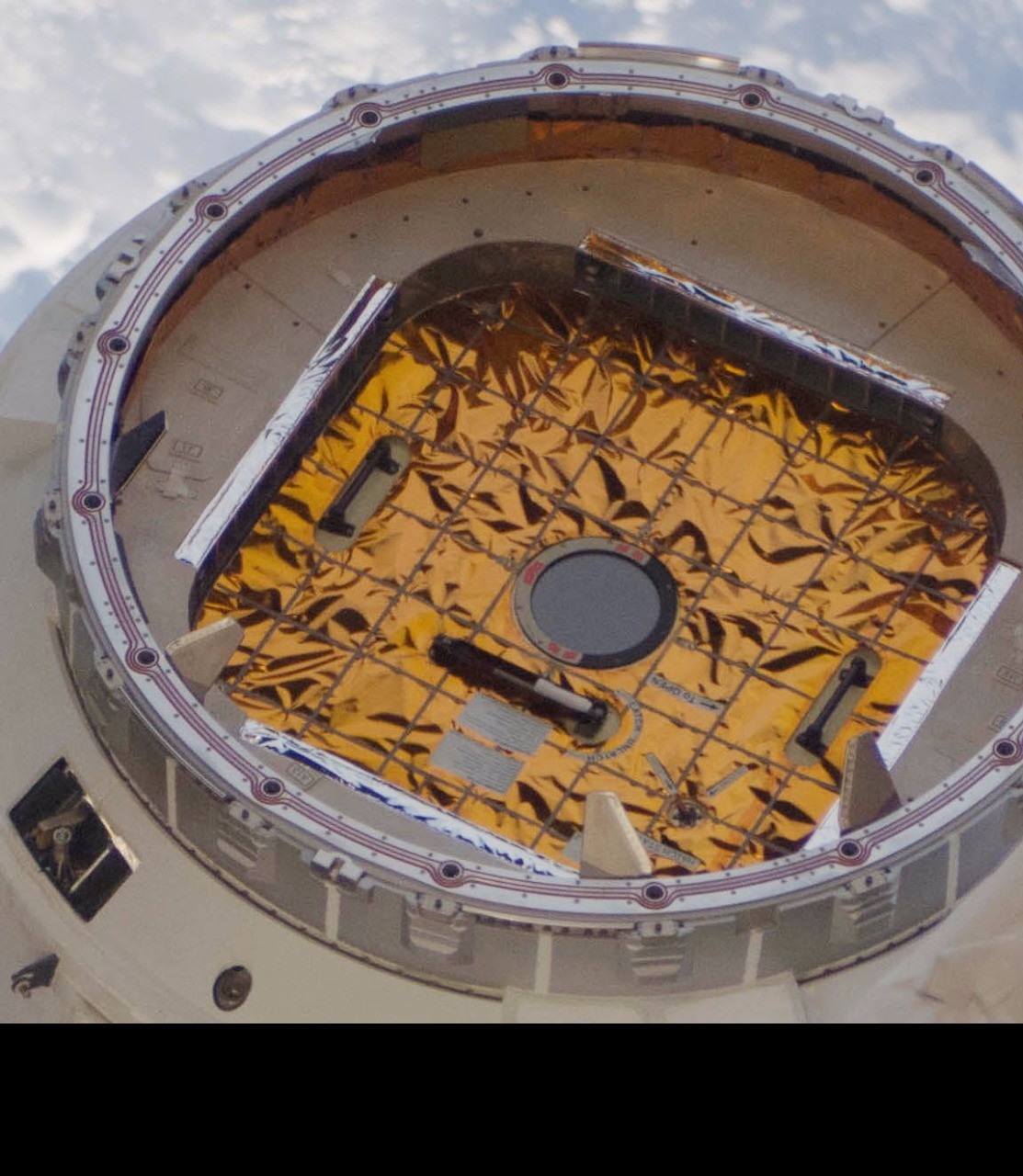
Closeup of some ISS berthing ports/hatches. Interestingly, they use a 4-point attachment unlike the 3-petal docking and capture system
I'm sure there were good technical reasons for this, but part of me feels this was probably to accommodate international partners
The space shuttle had a smaller 3-point docking/capture system, but the Dragon spacecraft and other European and Japanese supply craft use the berthing dock. Soyuz uses a different docking interface form all the rest
I just found an article from the Circuit Cellar 1999 issue on implementing RS-485 circuitry
"Designing RS-485 circuits"
http://embeddedsys.com/subpages/resources/images/documents/microsys_art_RS485.pdf (PDF)
There's a brief background on the protocol and the circuit seems relatively simple for a beginner to pickup. It uses a TI-SN75176B transceiver and 555 timer delay for transmit enable
It can probably be extended with a bit of effort since it's not as robust as typical implementations that have separate twisted pairs for TX/RX
Going back to this DIY space station idea, it occurs to me that a lot of the complexity is due to trying to solve previously unforeseen problems
Not that today, all these problems are solved, but we understand them a lot more (including communications issues) than we did even 10 years ago
And then there's the fallacy of the sunk cost, which outside contractors for NASA often milked for good value. If this is discarded, I'm sure the overall project can be greatly simplified as well





@troubleMoney Most of the surface components are lightweight aluminum so instead of a magnet, just plain string and extra chewing gum might be easier. Sticks to everything