
Ariel Millennium Thornton @arielmt@computerfairi.es
- Pronouns
- she
- Species
- feline/phoenix (shifts at will between them)
- Fairy wand currently on
- GEOS programming guide
- Website
- https://thornton2.com/ArielMT
Admin
✨ Kind 'Net Help Desk fairy by day. ✨
✨ Weird & furry Unix fairy by night. ✨
✨ Sometimes a retrocomputer fairy. ✨
✨ Pays the ComputerFairi.es bills. ✨
✨ Sparkly✨shellscript✨princess. ✨
✨ Age: Mere days younger than ✨
✨ the Intel 4004 & Unix 1st Edition. ✨
✨ Follow requests welcome. ✨
✨ 
 ✨
✨
Joined May 2017
Ariel Millennium Thornton
boosted

Ariel Millennium Thornton
boosted

Ariel Millennium Thornton
boosted

Ariel Millennium Thornton
boosted

Ariel Millennium Thornton
boosted

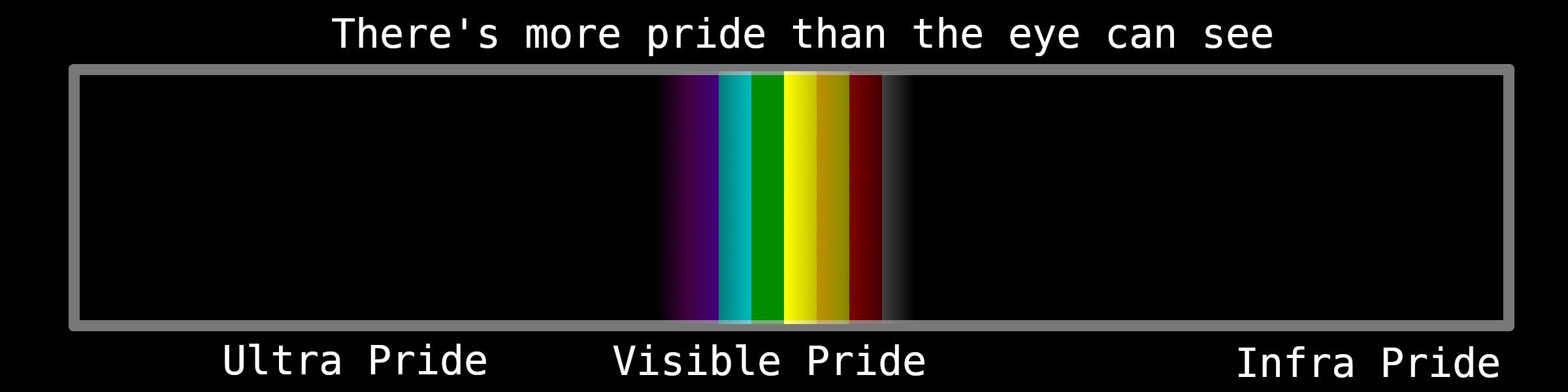
Happy Pride Month, everyone!  Time to be loud and proud!
Ariel Millennium Thornton
boosted

@pfish.zone so much of the maintainer community right now is handwringing about "but if we ban LLM use, how will we tell?" and I am exasperated because the answer is not some sophisticated word-probability detection machine, it is "they will be blindingly obvious about it, and if they manage to not be obvious for a second, they will brag about it, they can't stop themselves"
Ariel Millennium Thornton
boosted

Ariel Millennium Thornton
boosted

Oh this is an excellent resource for those wanting to avoid slopped projects!

Ariel Millennium Thornton
boosted

@dbattistella I don't believe that publicly traded for-profit companies are capable of this. I think the very fact that such a company is incentivized to perpetually extract wealth from workers and customers and give it to 3rd party share holders who contribute nothing to wealth generation beyond a one-time contribution of capital is what makes these companies grow into vile monsters over time. They are exploitative by design, and this is the dominant form of company in our economy.
It's possible to break this mold. Cooperatives are democratically controlled, and often the workers and/or customers are the shareholders, with equal shares. This changes the incentive structure from an exploitative one to, you guessed it, a cooperative one. If we could only make this the dominant form of company in our economy, we would live in a very different world where "don't be evil" was the natural order of things.
Ariel Millennium Thornton
boosted

The man who wrote "Don't be evil" said he chose it specifically so it would be hard to remove. Paul Buchheit, the engineer who later built Gmail, suggested the phrase at a Google corporate values meeting on July 19, 2001.
Then in early 2018, internal documents leaked showing that Google had signed a Pentagon contract to build AI to analyze drone footage. By April, over 3,000 Google employees had signed a letter to Sundar Pichai demanding the contract be cancelled.
The letter specifically cited "Don't be evil" as the standard the company was failing to meet. Dozens of engineers resigned in protest.
Sometime between late April and early May, the slogan disappeared from the code of conduct's preface.
Ariel Millennium Thornton
boosted



 🍵
🍵 
-25zn is quickly becoming my favorite #ed (1) command. ;)
Ariel Millennium Thornton
boosted

please help
i need linux mint compatible screan reader
please boost
i dont know where to look rn or whats good
Ariel Millennium Thornton
boosted

dj chocolate stand
Ariel Millennium Thornton
boosted

yeah 3.4.1 was the last version of rsync. no living human knows what happened after that. a mystery.
Ariel Millennium Thornton
boosted

Bone hurting Juice
Ariel Millennium Thornton
boosted

If you feel like you need to use llm codegen, consider using drugs instead, they are better for you and people around you...
Ariel Millennium Thornton
boosted








A recent discussion about ranges in ed(1) & vi(1) led to detailing the difference between using a comma and using a semicolon when separating the beginning/end of a range.
To clearly demonstrate the difference, create a file with 20 sequential numbers in it:
$ jot 20 > data.txt # or use seq 20
and open it to line 10:
$ ed data.txt
51
10
If you use a semicolon like
?5?;/8/n
it will search backwards from the current line (line 10) for the line containing "5" (line 5) and then from line 5 search forward to the next line containing "8" (line "8") line and print/number those 4 lines.
If instead you're on line 10 and you use a comma like
?5?,/8/n
it will search backwards for the line containing "5" (line 5), then search forwards for "8" from your starting location (line 10), landing on "18", and print/number those 14 lines.
Artificial intelligence as in fake diplomas.
The only art forms LLMs and GenAI seem to be good at are bullshit artistry and confidence artistry. As the user, you are not the artist's director. You're the bullshit artist's audience and the con artist's mark.
- Pronouns
- she
- Species
- feline/phoenix (shifts at will between them)
- Fairy wand currently on
- GEOS programming guide
- Website
- https://thornton2.com/ArielMT
Admin
✨ Kind 'Net Help Desk fairy by day. ✨
✨ Weird & furry Unix fairy by night. ✨
✨ Sometimes a retrocomputer fairy. ✨
✨ Pays the ComputerFairi.es bills. ✨
✨ Sparkly✨shellscript✨princess. ✨
✨ Age: Mere days younger than ✨
✨ the Intel 4004 & Unix 1st Edition. ✨
✨ Follow requests welcome. ✨
✨ ✨
Joined May 2017